When it comes to bathroom safety and accessibility, two common solutions often come up: the commode chair and the toilet seat riser. While both are designed to assist individuals with mobility challenges, they serve different purposes and are suited for different scenarios. Choosing the right option can significantly improve comfort, independence, and safety—especially for seniors, post-surgery patients, or individuals with disabilities.
This guide breaks down the key differences, practical use cases, and buying considerations to help you make an informed decision.
What Is a Commode Chair?
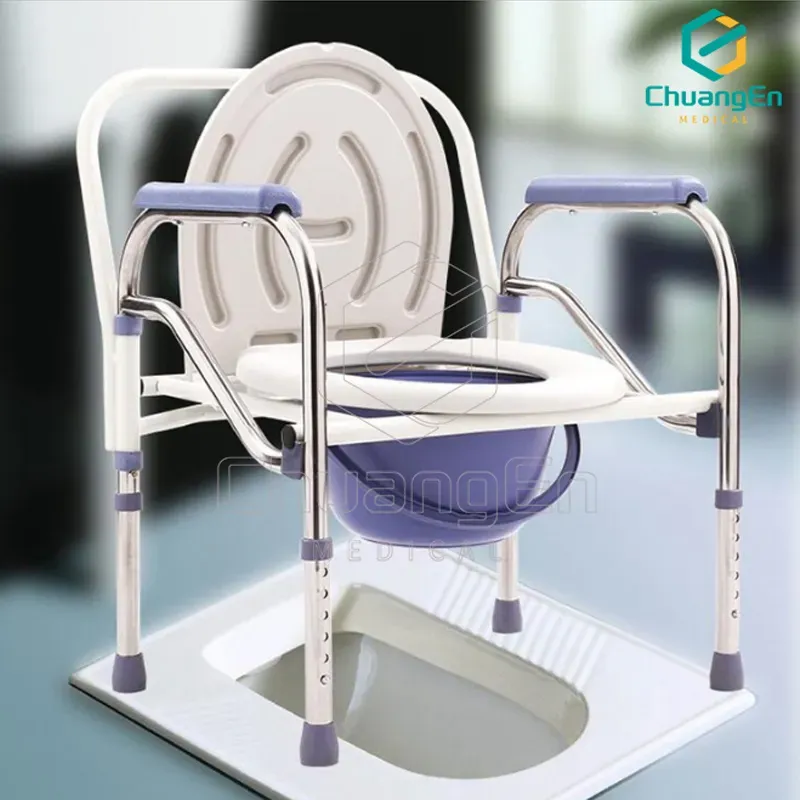
A commode toilet chair is a portable toilet that can be used anywhere, not just in the bathroom. It typically consists of a chair-like frame with a seat, lid, and a removable bucket underneath for waste collection.
Key Features:
- Freestanding and portable
- Includes a waste container (bucket)
- Often has armrests and back support
- Can be placed in bedrooms or living spaces
- Some models are height-adjustable or foldable
Ideal For:
- Individuals with limited mobility who cannot easily reach the bathroom
- Post-surgery recovery (hip, knee, or spine procedures)
- Nighttime use to avoid long walks to the toilet
- Home care environments without immediate bathroom access
What Is a Toilet Seat Riser?
A toilet seat riser (also called a raised toilet seat) is an attachment placed on top of a standard toilet to increase its height. This makes sitting down and standing up easier.
Key Features:
- Installed directly on an existing toilet
- Raises seat height by 2–6 inches
- Available with or without armrests
- Lightweight and easy to install
- No waste container (uses the existing plumbing)
Ideal For:
- Individuals with joint pain or limited bending ability
- Elderly users who need slight assistance
- People recovering from surgery but still mobile
- Permanent or semi-permanent bathroom modifications
Commode Chair vs Toilet Seat Riser: Core Differences
1. Functionality
- Commode Chair: Works as a standalone toilet. It does not require plumbing and can be used anywhere.
- Toilet Seat Riser: Enhances an existing toilet by raising its height for easier use.
👉 If you need a portable solution, a commode chair is the clear winner.
👉 If your bathroom is accessible but just too low, a toilet seat riser is sufficient.
2. Mobility & Placement
- Commode Chair: Highly portable; can be placed in bedrooms or near beds.
- Toilet Seat Riser: Fixed to a toilet; cannot be moved easily.
👉 For users who cannot walk long distances, commode chairs offer more flexibility.
3. Hygiene & Maintenance
- Commode Chair: Requires manual emptying and cleaning of the bucket.
- Toilet Seat Riser: Uses standard toilet flushing—minimal maintenance.
👉 If ease of cleaning is a priority, a toilet seat riser is more convenient.
4. Comfort & Support
- Commode Chair: Typically includes armrests, backrests, and wider seating.
- Toilet Seat Riser: Basic models may lack support unless upgraded versions include handles.
👉 For users needing full-body support, a commode chair is more ergonomic.
5. Cost Comparison
- Commode Chair: Generally more expensive due to added features and portability.
- Toilet Seat Riser: More affordable and widely available.
👉 Budget-conscious users often start with a toilet seat riser.
6. Installation
- Commode Chair: No installation required—ready to use out of the box.
- Toilet Seat Riser: Requires fitting onto a toilet, sometimes with locking mechanisms.
👉 For quick setup, commode chairs are more straightforward.
Pros and Cons Summary
Commode Chair
Pros:
- Portable and versatile
- Suitable for limited mobility
- Provides full support
- Can be used anywhere
Cons:
- Requires cleaning and maintenance
- Takes up space
- Higher cost
Toilet Seat Riser
Pros:
- Affordable
- Easy to install
- Low maintenance
- Uses existing plumbing
Cons:
- Not portable
- Limited support (basic models)
- Requires access to a bathroom
Which One Should You Choose?
The right choice depends on the user’s mobility level, living environment, and care needs.
Choose a Commode Chair if:
- The user cannot reach the bathroom easily
- You need a bedside toileting solution
- Full support and stability are required
- Caregivers are available to assist with cleaning
Choose a Toilet Seat Riser if:
- The user can walk to the bathroom but struggles with sitting/standing
- You want a simple and cost-effective upgrade
- Minimal maintenance is preferred
- Bathroom access is convenient
Combination Option: 3-in-1 Commode Chairs
Some modern designs function as:
- A standalone commode
- A toilet safety frame (placed over a toilet)
- A raised toilet seat alternative
These hybrid models offer maximum flexibility, especially in home care setups where needs may change over time.
Safety Tips to Consider
Regardless of your choice, safety should always come first:
- Ensure non-slip rubber feet for stability
- Check weight capacity limits
- Use models with armrests for better support
- Keep the surrounding area dry to prevent slipping
- Regularly inspect for wear and tear
Final Thoughts
Both commode chairs and toilet seat risers are essential tools for improving bathroom accessibility, but they address different levels of need.
- A commode chair is best for users with severe mobility limitations or those who require bedside care.
- A toilet seat riser is ideal for individuals who need minor assistance while maintaining independence.
Making the right choice not only enhances safety but also restores dignity and confidence in daily routines.
FAQ
1. Can a commode chair be placed over a toilet?
Yes, many commode chairs are designed to fit over a standard toilet, functioning as a raised seat with support rails.
2. Are toilet seat risers safe for elderly users?
Yes, especially models with armrests and secure locking mechanisms. Proper installation is critical.
3. How often should a commode chair be cleaned?
After each use, ideally. Regular disinfection helps maintain hygiene and prevent odors.
4. What height should a toilet seat riser be?
Typically between 2–6 inches, depending on the user’s height and mobility needs.
5. Do I need tools to install a toilet seat riser?
Most models are tool-free, but some may require simple adjustments or tightening.