For people who spend long periods in bed, choosing the right mattress can be an important part of pressure care. A standard mattress may not distribute body weight evenly enough, especially for users with limited mobility. Pressure relieving mattresses are designed to reduce concentrated pressure on vulnerable areas such as the heels, hips, shoulders, and sacrum.
But not every pressure care mattress works in the same way. There are several types available, ranging from simple foam systems to powered alternating pressure mattresses. Understanding the differences can help caregivers, healthcare facilities, and home users select a solution that matches the user's mobility, care needs, and risk level.
In this guide, we explain the main types of pressure relieving mattresses, how they work, and what to consider when choosing one.
What Is a Pressure Relieving Mattress?
A pressure relieving mattress is a specialized mattress designed to redistribute body weight and reduce prolonged pressure on specific parts of the body. It can be used in hospitals, nursing homes, rehabilitation centers, and home care environments.
Unlike a conventional mattress, a pressure care mattress may use specialized foam, air cells, multiple support zones, or changing air pressure to reduce continuous loading on the same area.
Pressure relief is particularly important for people who remain in bed for extended periods. Limited mobility can make it difficult to change position regularly, which may increase the risk of pressure-related skin damage.
The right mattress does not replace regular repositioning, skin checks, nutrition, hydration, and an appropriate care plan. Instead, it works as part of a broader pressure care strategy.

What Are the Main Types of Pressure Relieving Mattresses?
The main types of pressure relieving mattresses can be divided into four common categories: foam mattresses, static air mattresses, alternating pressure mattresses, and hybrid or advanced pressure redistribution systems.
| Mattress Type | Main Technology | Typical Application | Power Required |
|---|---|---|---|
| Foam pressure relief mattress | High-density or layered foam | Low to moderate pressure risk | No |
| Static air mattress | Air-filled cells | Moderate pressure care | Usually yes |
| Alternating pressure mattress | Inflating and deflating air cells | Higher pressure risk and long-term bed use | Yes |
| Hybrid mattress | Combination of foam and air | Flexible pressure management | Usually yes |
Each type offers different advantages. The best option depends on the user's condition, mobility, weight, care environment, and required level of pressure redistribution.
1. Foam Pressure Relieving Mattresses
Foam mattresses are one of the simplest types of pressure-relieving mattresses. They use specially engineered foam layers to spread body weight over a larger surface area.
Common designs include high-density foam, memory foam, profiled foam, and multi-layer foam constructions. Some mattresses use different foam densities in different zones to provide additional support around the shoulders, hips, and legs.
One major advantage of foam is that it does not require a pump or electrical connection. This makes it practical for home care, transportation, and situations where continuous power is not available.
Foam pressure relieving mattresses are generally suitable for users with lower or moderate pressure risk, depending on the mattress design and individual assessment.
They are also relatively quiet and require less maintenance than powered air systems. However, foam does not actively change pressure distribution, so it may not be appropriate for users who require a higher level of pressure management.
2. Static Air Pressure Relieving Mattresses
Static air mattresses use air-filled cells to provide a supportive surface while distributing body weight across multiple areas.
Unlike alternating pressure systems, the air cells in a static air mattress generally remain inflated at a relatively stable pressure. The air-filled structure can conform to the user's body and help reduce concentrated pressure points.
Some models allow caregivers to adjust the firmness according to the user's body weight and comfort requirements. This makes them more adaptable than basic foam mattresses.
Static air systems can be useful in home care, rehabilitation, and other environments where additional pressure redistribution is needed without continuous alternating cycles.
However, because the mattress does not continuously change which areas carry pressure, it may not provide the same level of dynamic pressure relief as an alternating pressure system.
3. Alternating Pressure Mattresses
An alternating pressure mattress is one of the most widely recognized powered pressure care systems.
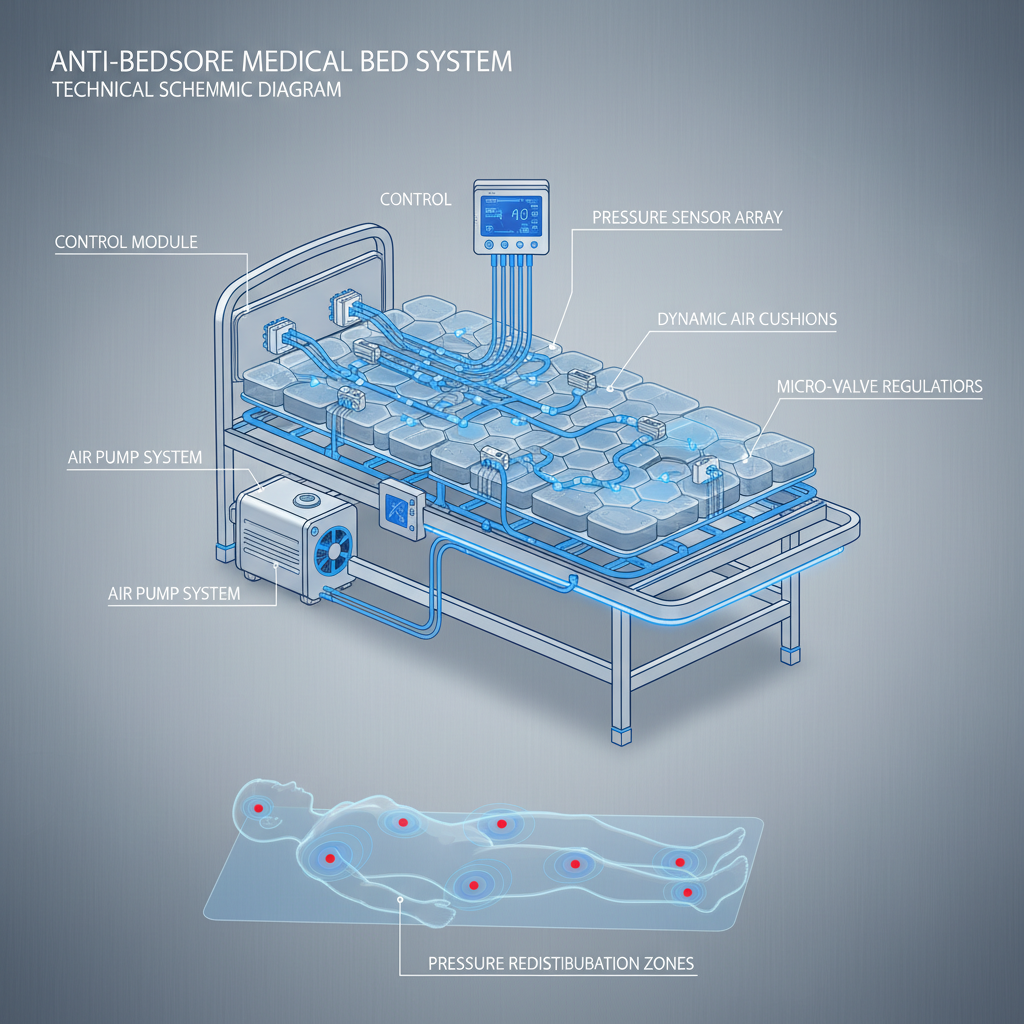
It typically consists of multiple air cells connected to a pump. The pump periodically inflates and deflates different groups of cells. For example, one group may be inflated while another group is partially deflated, then the pressure cycle changes.
This alternating action helps reduce the length of time that continuous pressure is applied to the same body area.
Many systems allow users or caregivers to adjust settings such as pressure level, cycle time, and firmness. Some models also include features such as low-pressure operation, CPR deflation, audible alarms, and adjustable comfort settings.
Alternating pressure mattresses are often considered when users have limited mobility or spend extended periods in bed. However, they require an appropriate power source and regular monitoring of the pump and air cells.
4. Hybrid Pressure Relieving Mattresses
Hybrid mattresses combine two or more pressure redistribution technologies, commonly foam and air.
A hybrid design may use a supportive foam base together with air cells in selected areas. This approach aims to combine the stability and comfort of foam with the pressure redistribution capabilities of air.
Hybrid systems can be useful when users need more pressure management than a standard foam mattress can provide but still benefit from the solid support of a conventional mattress structure.
Depending on the design, hybrid mattresses may also offer different operating modes. Some can function as a static surface and switch to an alternating pressure mode when needed.
For hospitals, nursing facilities, and home-care providers, this flexibility can make hybrid systems an attractive option.
How Do Pressure Relieving Mattresses Work?
Although designs vary, most pressure relieving mattresses work through one or more basic principles:
Weight redistribution: The mattress spreads body weight across a larger surface area instead of allowing pressure to concentrate in one location.
Body contouring: Materials such as specialized foam or air cells adapt to the user's body shape to improve surface contact.
Pressure cycling: Alternating systems periodically change air pressure in different mattress zones, reducing continuous loading.
Support zoning: Some mattresses use different materials or firmness levels in specific areas to balance pressure relief and body support.
These functions are designed to support pressure management, but mattress performance also depends on correct setup, user positioning, and regular care.
How to Choose the Right Pressure Relieving Mattress
When comparing different types of pressure relieving mattresses, consider more than the mattress material.
1. Pressure Risk
Start with the user's pressure risk and mobility level. A person who can reposition independently may have different requirements from someone who remains in bed for most of the day.
2. Body Weight and Size
Check the mattress manufacturer's recommended weight range, mattress dimensions, and maximum safe working load. An unsuitable mattress can reduce both comfort and pressure redistribution performance.
3. Care Environment
Consider where the mattress will be used. A home-care mattress may need to be quiet, easy to operate, and simple to maintain, while a hospital mattress may require additional functions and compatibility with medical beds.
4. Power Requirements
Powered air mattresses need electricity to operate the pump. If the mattress will be used in an environment where power interruptions are possible, check whether the system provides suitable backup or low-air-loss protection.
5. Cleaning and Maintenance
For healthcare applications, the mattress cover should be easy to clean and suitable for the intended infection-control procedures. Check whether covers are removable, waterproof, breathable, and compatible with the manufacturer's cleaning instructions.
6. User Comfort
Pressure relief should not come at the expense of basic comfort and support. Firmness, noise, surface feel, temperature, and ease of movement can all affect whether the user can tolerate the mattress for long periods.
Pressure Relieving Mattress vs. Pressure Relief Cushion
A pressure relieving mattress supports the entire body while the user is lying down. A pressure relief cushion, in contrast, is designed primarily for sitting surfaces such as wheelchairs or chairs.
The two products serve different purposes and should not be considered interchangeable.
For users who spend significant time both in bed and in a wheelchair, a coordinated pressure management strategy may require both a suitable mattress and an appropriate seating cushion.
Why Choosing the Right Mattress Matters
There is no single mattress that is suitable for every user. Foam, static air, alternating pressure, and hybrid systems each provide different approaches to pressure redistribution.
For lower-risk users, a properly designed foam mattress may offer a practical and maintenance-free solution. Users who require more active pressure management may benefit from an air-based system, while hybrid mattresses can provide a balance between support and dynamic pressure redistribution.
The key is to match the mattress to the user's individual needs rather than choosing a product based only on price or appearance.
Final Thoughts
Understanding the different types of pressure relieving mattresses makes it easier to compare pressure care solutions for home care, hospitals, nursing facilities, and rehabilitation settings.
Foam mattresses provide simple, power-free pressure redistribution. Static air mattresses offer adjustable air support, while alternating pressure mattresses actively change pressure across different air cells. Hybrid systems combine multiple technologies to provide greater flexibility.
Before selecting a mattress, consider pressure risk, mobility, body weight, mattress size, care environment, maintenance requirements, and power availability. Most importantly, use the mattress as part of a complete pressure care plan rather than as a standalone solution.
For healthcare providers and distributors, selecting a reliable pressure relieving mattress supplier with clear product specifications, operating instructions, and after-sales support can also help ensure consistent product performance in long-term care applications.