Choosing between a quad cane and a regular cane depends on how much support and stability you need while walking. Although both are common walking aids, their designs provide different levels of support.
A quad cane has a four-point base that stays in contact with the ground, while a regular cane usually has a single-point tip. This basic design difference affects stability, weight, maneuverability, and everyday use.
Understanding the differences between a quad cane vs regular cane can help users, caregivers, healthcare providers, and medical equipment buyers select a more suitable mobility aid.
What Is a Quad Cane?
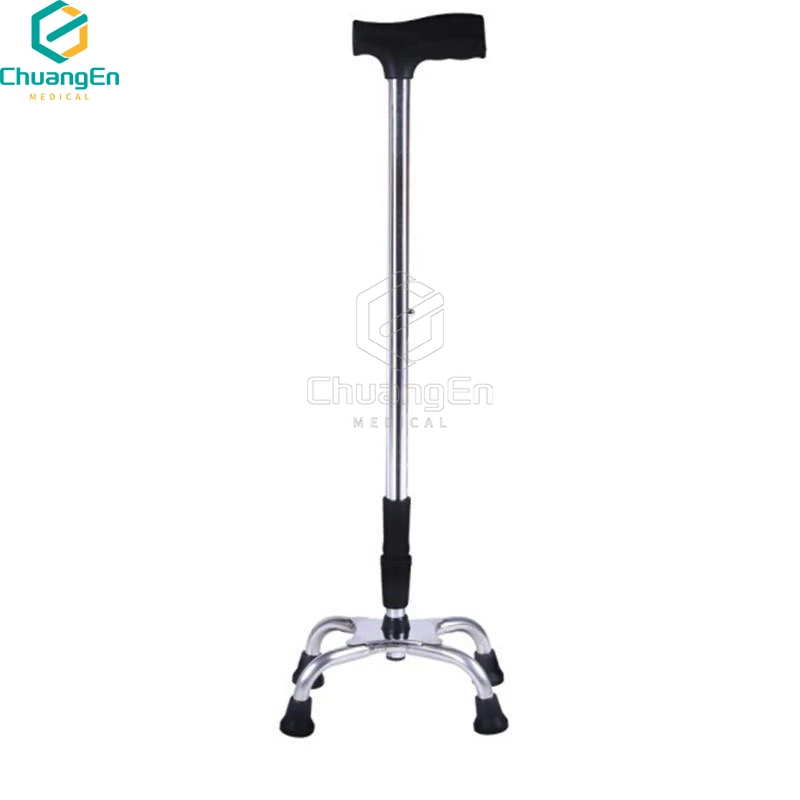
A quad cane, also called a four-point cane, has a wider base with four contact points. This structure gives the cane a larger support area than a traditional single-point cane.
The four-point base can provide additional stability for people who have difficulty maintaining balance while standing or walking. It can also help users who need more support than a regular cane can provide but do not require a walker.
Quad canes are commonly used in home care, rehabilitation, elderly care, and mobility support. Many models feature adjustable heights and ergonomic handles to accommodate different users.
The larger base is one of the main advantages of this type of cane. However, it also makes the cane heavier and less agile than a regular cane. Users may need more space to position the base correctly when walking or turning.

What Is a Regular Cane?
A regular cane, often called a standard or single-point cane, typically has one contact point at the bottom. Its simple design makes it lightweight, easy to carry, and relatively easy to maneuver.
A regular walking cane can provide balance support for people who have mild mobility limitations or need some additional assistance while walking. It is often convenient for everyday activities because it takes up little space and can be moved quickly.
Compared with a quad cane, a regular cane generally offers less stability. However, its lightweight design can make it more comfortable for users who already have good balance and only need limited support.
The right cane should always match the user's mobility needs rather than being selected based only on appearance or weight.

Quad Cane vs Regular Cane: Key Differences
The biggest difference between a quad cane and a regular cane is the base design. A quad cane has four contact points, while a regular cane has one.
| Feature | Quad Cane | Regular Cane |
|---|---|---|
| Base design | Four-point base | Single-point tip |
| Stability | Higher | Moderate |
| Weight | Generally heavier | Generally lighter |
| Maneuverability | Less agile | Easier to maneuver |
| Support level | More support | Basic balance support |
| Storage | Takes more space | Easy to store |
| Typical use | Greater stability needs | Mild balance assistance |
A quad cane may be a better option when stability is a major concern. A regular cane may be more appropriate when the user mainly needs light balance support and prefers a compact mobility aid.
Which Is More Stable: A Quad Cane or Regular Cane?
In general, a quad cane provides greater stability because its four contact points create a wider base of support. This can make it useful for users who need more balance assistance during standing and walking.
A regular cane provides support through a single point. While it can improve balance and reduce some of the load placed on the lower body, it does not provide the same base of support as a quad cane.
However, more stability does not automatically mean a quad cane is the best choice for everyone. A larger base can affect walking rhythm and maneuverability. Users should choose a cane based on their actual mobility needs and ability to control the device.
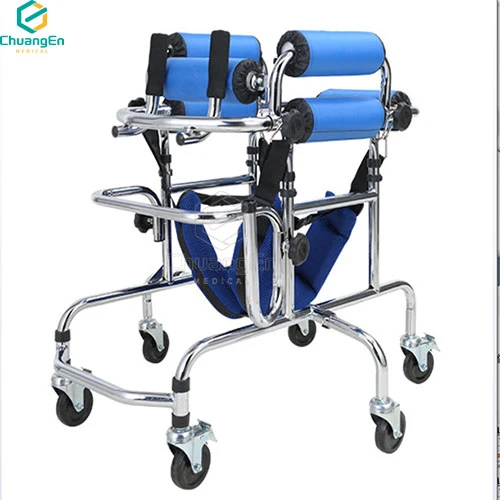
For people with significant mobility limitations, a healthcare professional may recommend a different walking aid, such as a walker or rollator.
When Should You Choose a Quad Cane?
A quad cane may be worth considering when a regular cane does not provide enough stability.
It can be useful for people who need additional balance support during everyday walking, rehabilitation, or recovery. The four-point base can help create a more stable contact area with the floor.
A quad cane can also be useful in situations where a walker would provide more support than necessary. It offers a middle option between a single-point cane and a more supportive walking frame.
When choosing a quad cane, consider the base size, overall weight, handle design, height adjustment range, and load capacity. The cane should also be appropriate for the user's walking environment.
When Is a Regular Cane a Better Choice?
A regular cane may be a better choice when the user needs only light support and values portability.
Its narrow base allows it to move easily with the body. This can make a single-point cane convenient for everyday walking, shopping, travel, and use in areas with limited space.
Regular canes are also generally easier to carry and store. For users who have sufficient balance but want additional support, this simple design may provide the right combination of convenience and assistance.
The cane should be used correctly and adjusted to an appropriate height. An improperly fitted cane can affect posture, comfort, and walking technique.
Quad Cane vs Regular Cane for Elderly Users
Older adults may have very different mobility needs. Some may only need a lightweight cane for occasional balance support, while others may require a more stable base.
For an elderly user with greater balance concerns, a quad cane may offer useful additional support. For someone who remains relatively steady while walking, a regular cane may be easier to handle.
The decision should consider strength, balance, coordination, walking ability, and the environment where the cane will be used.
A medical professional or physical therapist can provide personalized advice when there are concerns about falls, weakness, or significant changes in mobility.
How to Choose the Right Walking Cane
When comparing a quad cane vs regular cane, look beyond the number of points on the base. Several product and user factors matter.
1. Stability:
Determine how much balance support the user needs.
2. Weight:
A lightweight cane can be easier to lift and carry, while a heavier quad cane may provide a more substantial base.
3. Height adjustment:
An adjustable cane can accommodate different users and help achieve a more suitable walking position.
4. Handle design:
An ergonomic handle can improve comfort during regular use.
5. Base size:
Quad cane bases vary in size. A larger base may offer more stability but can require more space when walking.
6. Application:
Consider whether the cane will mainly be used indoors, outdoors, during rehabilitation, or for everyday mobility.
Quad Cane or Regular Cane: Which One Is Better?
There is no universal winner in the quad cane vs regular cane comparison. The better choice depends on the user's mobility requirements.
A quad cane is generally better suited to users who need more stability and a wider support base. A regular cane is usually better for users who need lighter balance assistance and prefer a simple, portable design.
For medical equipment distributors and mobility-aid suppliers, offering both types can help meet the needs of different customer groups. Product specifications such as material, height range, handle type, base dimensions, weight, and load capacity should be reviewed before purchasing.
The most important goal is to choose a walking aid that provides an appropriate level of support without making movement unnecessarily difficult.
Frequently Asked Questions
Is a quad cane better than a regular cane?
A quad cane provides a wider and generally more stable base, while a regular cane is lighter and easier to maneuver. Neither is universally better; the appropriate choice depends on the user's mobility and balance needs.
Is a quad cane more stable than a single-point cane?
Yes. The four contact points of a quad cane generally provide a wider base of support than the single tip of a regular cane.
Is a quad cane harder to walk with?
It can be. The wider base provides additional stability but may make the cane heavier and less maneuverable, especially in tight spaces.
Can a quad cane replace a walker?
Not always. A quad cane can provide more support than a regular cane, but a walker generally offers a larger and more stable support structure. Users with significant mobility limitations should seek professional advice about the most suitable walking aid.
What is the main advantage of a regular cane?
The main advantages are its lightweight design, compact size, and ease of maneuverability. It can be suitable for people who need basic balance support.
What should I consider when buying a quad cane?
Consider the base size, material, overall weight, height adjustment, handle design, load capacity, and intended application. For commercial buyers, product packaging, MOQ, customization, and applicable market requirements may also be important.